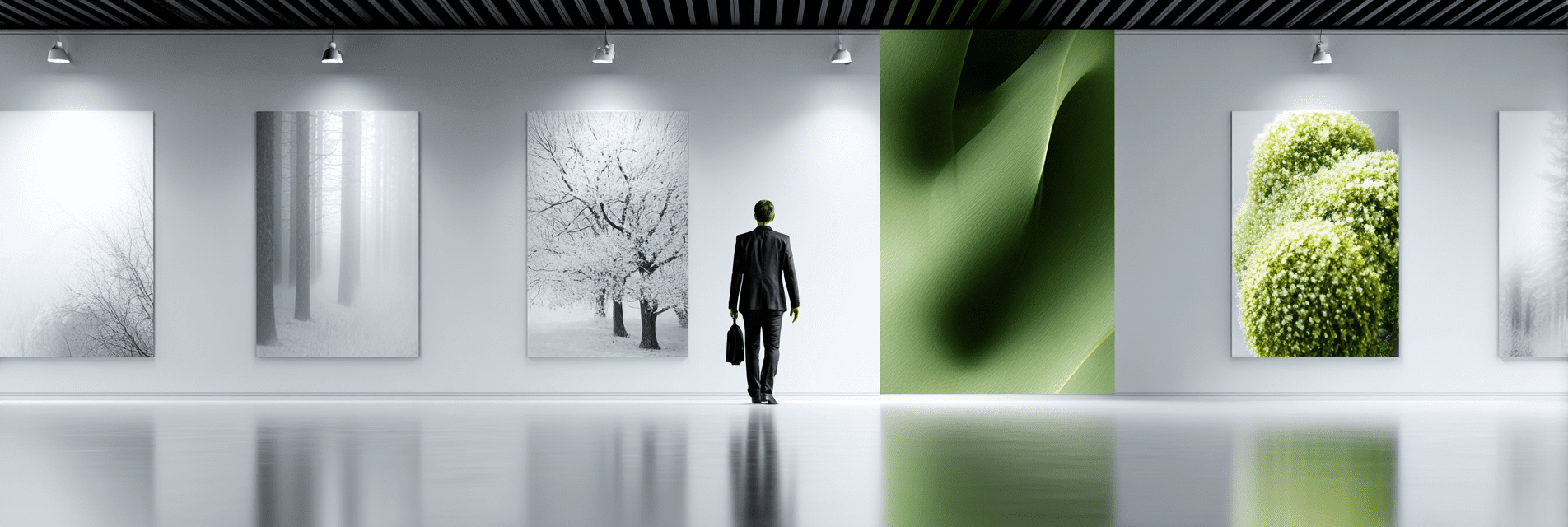
There are seasons when I write constantly — when every idea feels urgent and I can’t move fast enough to keep up with it all. And then there are the other seasons. The slow ones. The in-between stretches where ideas come quietly or not at all.
For a long time, I treated those slower phases as interruptions. Something to fix. Something to push through. I’d look at my empty pages and think I had lost my rhythm, that my work was slipping away while I waited for the spark to return.
But I’ve come to see that slowing down doesn’t mean I’ve stopped growing.
Sometimes it just means the work has shifted inward.
Even when I’m not producing, something is still happening beneath the surface. I notice it in the questions that start to echo in the back of my mind, or in the way I pay closer attention to ordinary things — a phrase that lingers, a color I can’t stop noticing, a line from a book that stays with me longer than expected.
Those quiet observations often become the roots of new ideas.
They form connections that I only recognize later, when I finally sit down to create again.
The slower seasons are where perspective matures. They remind me that creativity isn’t only about output. It’s about processing, noticing, absorbing — giving time for meaning to take shape before it becomes visible.
It’s hard to trust that, especially in a world that measures progress by what can be seen or shared. But I’ve learned that every phase of stillness carries its own kind of momentum. Not the forward rush of producing, but the inward pull that clarifies what matters most.
So I try to let myself move with the rhythm that’s present, even when it feels like nothing’s happening.
Because every cycle, fast or slow, leaves an imprint on the work that comes next.
When I look back at my past projects, I can trace those quiet stretches in between — the pauses that gave me time to reset, the silence that made space for a new idea to arrive.
The truth is, the work never really stops. It just changes shape.