On Monday I wrote about something I noticed after being away for a couple of weeks.
I had more energy, yes.
But that was not really the part that stayed with me.
What I noticed more was that things looked different.
Some ideas felt less urgent. Some felt more interesting. A few things I had been trying to force suddenly seemed easy to let go of.
That made me wonder if breaks do more than help us rest.
Maybe they also give us perspective.
I think that is the part I often forget.
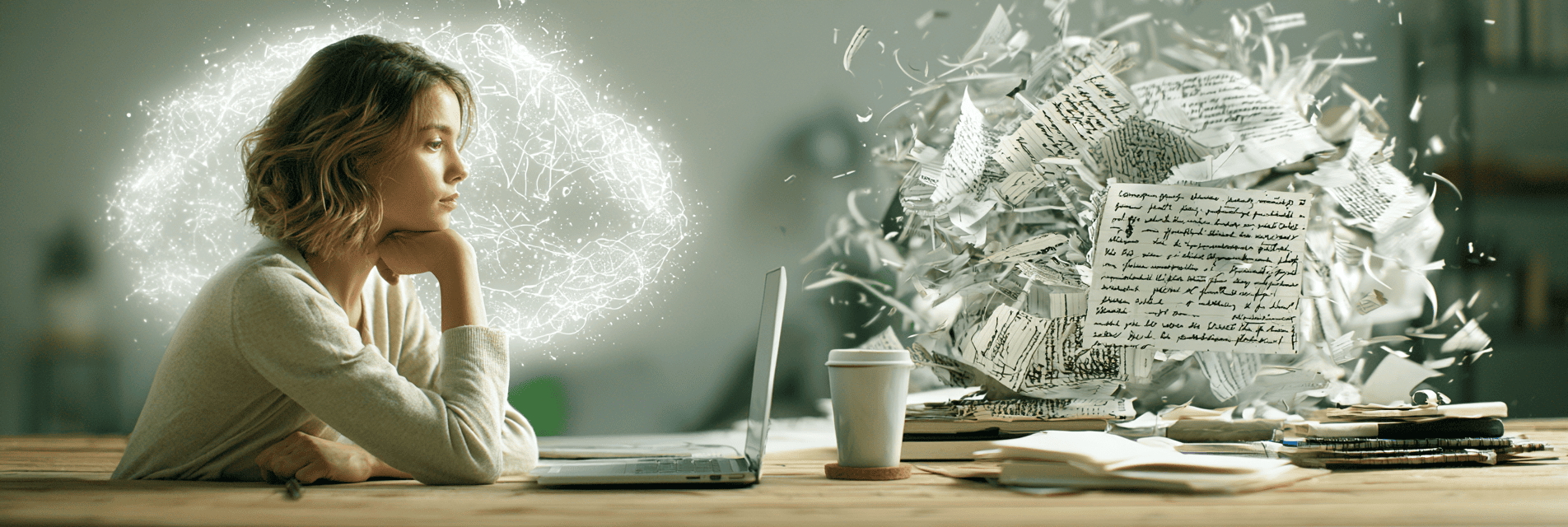
When I am deep inside a project, everything starts to feel equally important.
The video I am editing.
The post I should finish.
The idea I do not want to lose.
The next thing on the list.
The thing I have not even started yet but somehow already feel behind on.
When I am in the middle of all of it, I can lose the ability to see the difference between what matters and what is simply making noise.
A break changes that.
Not always immediately.
Sometimes the first part of a break is simply being tired.
Sometimes I still think about the work while I am supposedly not doing it.
Sometimes I mentally reorganize things I have already decided not to touch.
I am very talented at taking a break while still carrying the whole project around in my head.
But after a while, something shifts.
The noise gets quieter.
And when that happens, some things disappear.
Which is actually useful.
Because if an idea completely disappears from my mind the moment I stop pushing it, maybe it was not as important as I thought.
The ideas that come back on their own are different.
Those are usually the ones I pay attention to.
Distance Changes the Shape of Things
There is a strange thing that happens when I work on something for too long.
I stop seeing it.
I can still look at it.
I can edit it.
I can move things around.
I can probably explain every decision I made.
But I am too close to it.
It becomes like reading the same paragraph ten times. Eventually you are no longer reading what is actually there. You are reading what you think is there.
Creative work can become like that too.
A project starts with curiosity.
Then it slowly collects decisions.
Structure.
Deadlines.
Expectations.
Problems to solve.
And somewhere along the way, the original reason I cared about it can become buried under all the machinery of making it.
Stepping away creates distance.
And distance can be uncomfortable because it interrupts momentum.
We are told momentum is precious.
Do not stop.
Keep going.
Stay consistent.
Protect the habit.
There is truth in that. I know how easy it is for a short pause to become a long one.
But I also think we talk so much about momentum that we forget to ask whether we are still moving in a direction we actually want to go.
Sometimes continuing is easier than reconsidering.
A break can force that reconsideration.

Coming Back Is Its Own Test
One thing I noticed after these two weeks is that I did not come back wanting to continue everything.
That surprised me a little.
There were things I had been thinking about before the break that suddenly felt flat.
Not bad.
Just done.
And there were other things that immediately pulled me back in.
That difference matters.
I think returning to a project after some distance is a kind of test.
Not a test of discipline.
A test of interest.
Do I still care?
Am I still curious?
Would I choose this again if it were not already in progress?
That is a harder question than simply asking whether I can finish something.
I can finish a lot of things.
That does not mean all of them deserve to be finished.
Sometimes we continue because we already started.
Because we told someone we would.
Because we have spent time on it.
Because stopping feels like failure.
But breaks can loosen that grip.
They can make it easier to see the difference between commitment and habit.
Between persistence and obligation.
Between something that still has life in it and something we are carrying because we forgot to put it down.
Rest Is Not Always Empty
I used to think of rest as the opposite of creative work.
Work here.
Rest there.
One is productive.
The other is recovery from being productive.
The more I think about it, the less that division makes sense to me.
Some of my clearest thoughts have arrived when I was not actively trying to solve anything.
Walking.
Crocheting.
Sitting with coffee.
Doing something ordinary enough that my brain was not being asked to perform.

That does not mean every quiet moment secretly needs to become productive.
I do not want to turn rest into another task.
Rest does not need to justify itself by producing ideas.
But I do think space matters.
And creative work needs space more than I sometimes allow.
Not just space in a schedule.
Mental space.
Room for something unfinished to sit without being poked at every five minutes.
Room for an idea to change.
Room to forget something and see if it comes back.
Room to get bored.
We have become very good at filling every empty space.
There is always something to watch, read, answer, check, scroll, organize, or plan.
Maybe that makes it harder to notice what our own mind does when nobody is asking it to produce.
The Fear of Losing Momentum
I think this is probably why breaks can feel risky.
There is always that little fear that if I stop, I will not come back.
That the rhythm will disappear.
That the idea will lose its energy.
That I will become too comfortable doing nothing.
Sometimes that does happen.
But maybe that is not always a problem.
If a project cannot survive a pause, perhaps the pause did not kill it.
Perhaps the pause revealed something.
There are projects I have returned to months later with more interest than before.
And there are projects I have walked away from and never missed.
Both outcomes can be useful.
The important part is not keeping everything alive.
The important part is noticing what still feels alive when I return.
That is different.
Maybe Recharging Is Not About Filling Up
When I first thought about this, I used the word recharge because it felt obvious.
We talk about our batteries being low.
We take time off.
We recharge.
Then we go back to work.
But I am not sure that is exactly what happens.
A battery fills back up with the same kind of energy it had before.
A break can change more than that.
Sometimes I come back with less interest in something.
Sometimes with more.
Sometimes with a completely different idea.
Sometimes the energy does not return to the place where it was before.
It moves somewhere else.
Maybe that is not recharging.
Maybe it is recalibrating.
Or clearing.
Or simply noticing again.
I do not think I need the perfect word for it.
What matters is that stepping away can change the relationship I have with the work.
It can make some things quieter.
And other things louder.
It can remind me what I actually want to make.
Not what I should make.
Not what I planned to make three weeks ago.
What still feels worth returning to now.
And maybe that is one of the most useful things a break can give back.
Not just energy.
Choice.